Some perfumes enter a room before you do. Others sit close to the skin, almost secretive, revealing themselves only in fragments throughout the day. Le Labo Thé Matcha 26 belongs firmly in the second category.
The first time I smelled Thé Matcha 26, I remember feeling slightly confused. Not disappointed exactly, but surprised. I had expected something greener, sharper, perhaps more recognizably “matcha.” Instead, what I got was soft woods, creamy fig, skin musk, and a kind of warm, cocooning stillness.
It did not smell like walking into a Japanese tea ceremony. It smelled more like the memory of one.
And honestly, I think that misunderstanding explains why Thé Matcha 26 divides people so much online. Some approach it expecting an intensely realistic green tea fragrance and end up frustrated. Others fall deeply in love with its understated, almost meditative atmosphere.
After spending time with it properly, I’ve come to think Thé Matcha 26 is less about matcha itself and more about the emotional mood surrounding it: calm mornings, quiet cafés, oversized knitwear, soft light coming through windows. It’s one of the most intimate fragrances Le Labo has ever created.
What Thé Matcha 26 Actually Smells Like
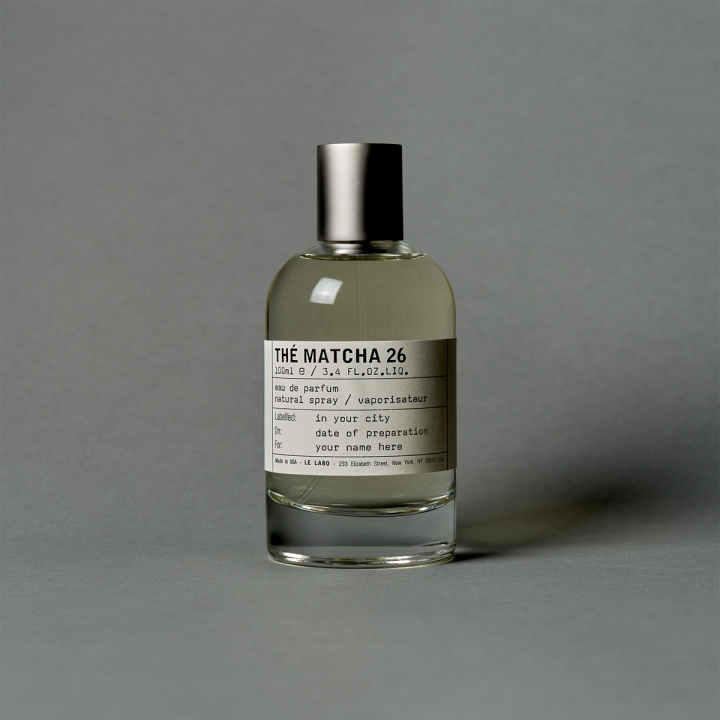
Despite the name, Thé Matcha 26 is not aggressively green. If you are expecting bitter ceremonial matcha powder, grassy freshness, or sharp herbal tea leaves, this may not be the perfume you imagine.
Instead, the fragrance opens creamy and softly woody, with a gentle fig note that immediately gives it warmth and texture. There’s tea here, but it feels muted and blended into the composition rather than standing front and center. The tea accord acts more like atmosphere than flavor.
Very quickly, the scent settles into something skin-like and comforting. Cedarwood and vetiver create a dry softness underneath, while musk smooths everything into a warm haze that feels incredibly close to the body.
There’s something almost tactile about Thé Matcha 26. It smells the way cashmere feels. Not luxurious in an obvious way, but quietly comforting and expensive in a manner that doesn’t need attention.
That, to me, is the fragrance’s real magic.
A Perfume That Feels Like Silence
What struck me most while wearing Thé Matcha 26 was how emotionally quiet it felt.
Many perfumes are designed around performance. They want projection, drama, compliments, recognition. Thé Matcha 26 feels completely uninterested in any of that. It doesn’t perform for other people. It exists for the wearer.
I wore it repeatedly during slower days — mornings working alone, café afternoons, rainy evenings, long walks without headphones — and each time it seemed to blend into my mood rather than interrupt it. It never felt distracting or loud. Instead, it became part of the background atmosphere of the day itself.
There’s a growing category of fragrances people describe as “quiet luxury perfumes,” and Thé Matcha 26 fits that description perfectly. Not because it smells expensive in a flashy way, but because it smells restrained.
It has confidence without excess.
The Matcha Note Is More Conceptual Than Literal
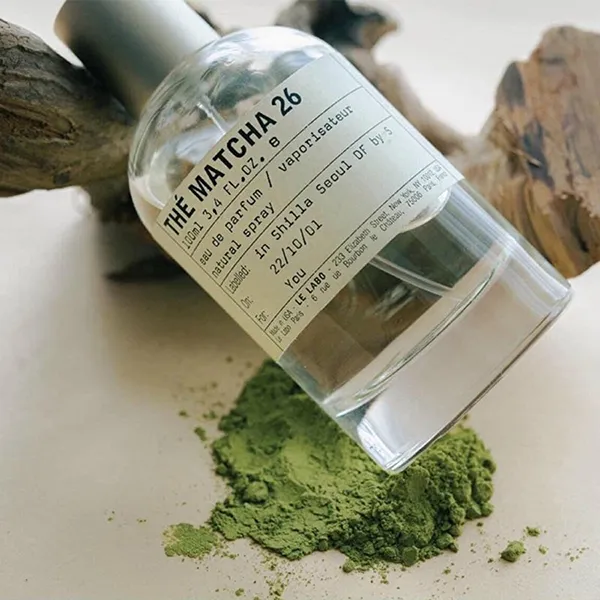
This is probably the most important thing to understand before buying Thé Matcha 26.
The “matcha” here is interpretive, not photorealistic.
Le Labo tends to approach fragrance in a conceptual way rather than aiming for strict realism. Thé Matcha 26 captures the softness, ritual, and calm associated with matcha culture rather than reproducing the exact smell of powdered green tea.
At times, I almost forget there’s supposed to be tea in the fragrance at all. What remains most vividly on my skin is creamy fig, dry woods, subtle bitterness, and warm musk.
Oddly enough, this abstraction is exactly why the perfume works so well. A fully realistic matcha fragrance could easily become too sharp, too herbal, or even slightly culinary. Thé Matcha 26 avoids that entirely by focusing on mood rather than accuracy.
The result feels much more wearable.
Performance and Wearability
Thé Matcha 26 performs differently from many modern niche fragrances because it isn’t trying to dominate a room. This is not Baccarat Rouge 540 or an oud-heavy projection monster.
Instead, it creates a soft aura around the skin that lingers quietly for hours.
On me, the scent lasts roughly six to eight hours depending on weather and clothing, though it stays fairly intimate throughout. Someone standing close to you will smell it clearly, but it’s unlikely to announce itself across a room.
Personally, I think that softness suits the fragrance perfectly. A louder version would probably ruin the entire mood.
I also find Thé Matcha 26 incredibly versatile. It works in warm weather without becoming suffocating, but still feels cozy enough for colder months. It transitions beautifully between daytime and evening because it never feels too formal or too casual.
If anything, its biggest strength is how naturally it fits into everyday life.
Why Thé Matcha 26 Became So Popular
Part of Thé Matcha 26’s success comes from timing.
Over the past few years, fragrance trends have moved increasingly toward skin scents, soft musks, minimalist woods, and perfumes that feel emotionally comforting rather than aggressively seductive. People seem less interested in “look at me” fragrances and more drawn to scents that feel calming, personal, and grounding.
Thé Matcha 26 arrived at exactly the right cultural moment.
It also taps into the aesthetic world many people aspire to right now: clean interiors, slow living, muted colors, Japanese-inspired minimalism, expensive basics, soft fabrics, natural light. Wearing it feels strangely aligned with all of that.
There’s also the Le Labo factor. Le Labo has built an identity around understated coolness, and Thé Matcha 26 arguably embodies that image more successfully than almost any fragrance in their lineup.
Is It Overpriced?
This is where things become complicated.
Objectively, Thé Matcha 26 is expensive for what is ultimately a subtle skin scent. People expecting dramatic complexity or massive projection may absolutely feel underwhelmed by the price.
But I also think judging fragrances purely by loudness misses the point entirely.
What Thé Matcha 26 offers is refinement. The transitions are smooth, the texture feels polished, and the scent carries an emotional coherence that many fragrances lack. Nothing feels harsh or forced. It simply melts into skin beautifully.
Would I recommend blind buying it at full price? Probably not. Thé Matcha 26 is too understated and too mood-dependent for that. Some people will smell it and immediately wonder why everyone online is obsessed with what seems like a soft woody musk.
Others will wear it once and suddenly understand why it inspires near-devotional loyalty.
Who Will Love Thé Matcha 26?
I think Thé Matcha 26 works especially well for people who already enjoy:
- skin scents
- minimalist fragrances
- woody musks
- fig perfumes
- intimate, non-performative scents
It’s also perfect for people who dislike traditional “perfumey” perfumes. There’s nothing loud, sharp, sugary, or overly floral here.
What it does exceptionally well is create the impression that someone naturally smells comforting, clean, calm, and slightly addictive.
It’s the olfactory equivalent of impeccable personal taste that doesn’t need to prove itself.
Who Might Dislike It?
If you prefer strong projection, dramatic evolution, or highly noticeable fragrances, Thé Matcha 26 may feel frustratingly subtle.
Likewise, anyone searching specifically for a realistic green tea perfume may feel disappointed by how abstract the tea note actually is.
I’ve also noticed that some people perceive the fig and musk combination as slightly sour or damp depending on skin chemistry. This isn’t universal, but it’s worth testing before committing to a full bottle.
Final Thoughts: Is Thé Matcha 26 Worth It?
I didn’t immediately fall in love with Thé Matcha 26. It took time.
Unlike louder fragrances that impress instantly, Thé Matcha 26 reveals itself gradually. The more I wore it, the more I understood its appeal. It became less about smelling “interesting” and more about how it made me feel while wearing it.
Calmer. Softer. More grounded somehow. And that’s not something every perfume can achieve.
Is it the most technically complex fragrance ever created? No. Is it the most realistic tea perfume on the market? Also no.
But Thé Matcha 26 succeeds at something rarer: it creates atmosphere. It turns mood into scent.
And in a world full of perfumes constantly trying to demand attention, there’s something deeply refreshing about a fragrance that simply sits quietly beside you all day, like warm light through a window.